Allowing Ourselves to Rest & Why We Don't
When it comes to health and well-being, to enjoy peace in our lives, rest is vital. Our bodies and minds need time away from duty to rejuvenate and heal. Our spirit needs time to ourselves to reflect and enjoy all the things we are working for. Without this, life diverges and becomes out of balance, and our health, well-being, energy and motivation begin to suffer.
When we work, produce or stay busy from a place of passion, purpose and welcome responsibility, our activity can feel effortless, naturally responding to the energy that is being expressed through us.
But if our motivations are from a place of obligation, pressure, avoidance or resistance to rest, our experience can be very different. We might be ignoring vital signs to rest, pushing our limits to dangerous levels. Adding stress that our body can not hold or process. Our nervous system knows, feels it and can struggle to keep up.
This type of response can be a form of hyperindependence, perfectionism and related to trauma, abuse or neglect wounds deeply rooted in our conscious mind and fuelled by nervous system dysregulation. It can be the ongoing embodiment of a fight or flight trauma response.
When we work, act, and produce from this space, it is often disruptive not only to ourselves but to others around us. It can lead to powerful energetic responses, high emotions or perhaps fuel a crash and burn cycle leading to burnout, depression, heightened anxiety or compulsive behaviours.
We might also add additional problems to our pattern when we choose to try to "switch off" artificially. When we self-soothe rather than address the underlying cause or behaviour, and attempt to minimise the impact on our lives. This can be through addictions and other forms of misguided coping strategies. Adding more effort ot our lives and feeding patterns of avoidance.
Even activities such as working out, participation in lots of hobbies, practices or classes can all be a form of overcompensating and signs of internal struggle.

In these states, often our work or actions suffer regardless of our showing up physically because we can give and perform with less clarity, cohesion and with less mental or physical energy. And I know you likely know this, you feel it, and perhaps even make plans to rest. Book holidays, tell yourself you’ll relax, but it doesn’t seem to happen. For one reason or another, one excuse arises after the next, and you never actually stop.
You might even be at the stage where you can see this pattern, or are noticing it now, and you agree with me, this is why you're trying to take the time off in the first place. It's other things that get in the way.
But it's these other things, the aspects of life we can't control, other people, changes in circumstances, being let down or having things go wrong, that are not always our responsibility to instantly respond to, that add to the pattern.
It's a trauma response to jump in and be the saviour, to fix and people-please our way through crisis after crisis that might not even be ours.
This is where our overstriving kicks in; it's a coping mechanism, a form of fawning response most likely learned in childhood. We can't let go, say no, let things fail, let someone else handle things or just wait and see if time and space change anything.
It can be a boundary issue related to not feeling enough, combined with a lack of trust in others. We believe that they aren’t enough and that we are needed to fix things, despite also believing we are not worth enough to rest, enjoy praise or receive rewards. Always feeling the need to be the one to step in, not being able to allow others to take control, and being afraid of allowing things to be less than perfect.
But what we are forgetting, minimising, ignoring when we go along with, is our innate, important and vital human needs. Rest, taking a break, needs to be a priority. A solid, protected and respected priority.
Our body has a natural cycle of sleep and rest that we often learn to ignore, often through early conditioning. It might be due to having to stick with childhood routines defined by others, education and schooling, or the needs of our parents, caregivers, or institutions. Any early stress or trauma can affect our natural sleep and rest cycles, and the feeling of safety, regular, deep sleep or relaxation requires.
Our natural systems become dysregulated, and those body cues are annoying, and later repressed signals we choose to ignore.

As we get older, these signals become more important. When we are working, healing, growing and when we find ourselves feeling over-stressed, overwhelmed and burned out, we can struggle to reconnect with our body and these signals again. Furthermore, our mind, belief systems and ego can all be working against us, telling us that rest is wrong, or it's not necessary and even harmful to our progress, work or relationships in some way.
It may even be the case. If we have been maintaining relationships and work environments that are manipulative, harmful and even toxic at times, we realise subconsciously, we might have to give up some of these habits, connections and environments to actually learn how to recover and heal to regain our wellness, and that feels too risky. Like too big a change.
This is where our boundary setting comes in, with ourselves and with others.
It can be a challenge and take time and practice to be able to set that boundary, hold the “no”, and relax with the decision you've made. Initially, our efforts to relax can even be prevented because of this process. But it is all part of the healing and recovery solution.
It becomes part of our growth as we learn and allow ourselves to face some new types of discomfort, so you can enjoy the space you need.
Realistically, this vital step, this stage of acknowledging the implications of our conditioning, how our ideas and beliefs might have been controlling us for so long and where our habits or relationships have become out of balance, or harmful, is vital. It is the stage where we may practice and explore the benefits and challenges of putting ourselves first and prioritising our needs
It is the phase of growth where we realise and mature to see the bigger picture that caring for ourselves is the only aspect of life we can truly control.
Being able to do this might require some shadow work and self-exploration to understand why we can't stop, say no or rest in the first place. Most often it comes back to either learned behaviour as children where we were rewarded, encouraged for stepping in, performing well or being useful beyond our capacity and also perhaps shamed, or discouraged for saying no, not cooperating or wanting time to ourselves.
At its core, this behaviour is a form of avoidance. It could be a fight, flight or fawn trauma response that has been a part of our life and is a preferred response adopted by our nervous system.
It may also be a coping mechanism related to traumatic events, where we learned to cope and ignore our emotions of fear and shock by being busy. Especially if these events happened to coincide with time off, holidays, rest days or when we were "supposed" to be enjoying ourselves or relaxing.
In relationships, it can also be a symptom of codependent habits. Ongoing fears of being alone or unwanted. It can carry enabling habits or behaviours as we allow others to use us, our energy, resources or efforts in exchange for their presence and the stability or continuity that brings (even if they are not healthy relationships). Dysfunction, in some cases, can feel safe and comfortable even if it is not good for us in the long term.
Without some self-enquiry, it can be hard to know initially, but as you take the time to explore, these motivations will reveal themselves, in the space and rest time you need and crave. It is why your soul is craving the time, nudging you to rest; your wellness potential is calling.
The good news is that the solution of boundary setting can be practised and skill that can be developed and will become easier, more comfortable and natural with time.
Especially when we take the time to unpack and understand the reasons why we struggle and make a strategy we can use to reinforce our boundaries and any resistance towards them, transforming and reconditioning our mind in the process.
The more we allow ourselves to relax and prioritise time off, the easier it becomes to allow situations out of our control to happen without needing to immediately step in. Sometimes there is someone else who can handle things, time does sort things out, and situations that seem vitally important aren't.
The process allows us the time and space to observe and can become informative and beneficial to develop a more aligned lifestyle and even begin a considered life design process.
Rest and reflection benefits can ripple into many areas of our lives and ultimately improve our health, wellness, work and relationships. The only way to release our controlling habit is to step in and save the day; the only way to know if something is vital is to choose not to respond and see what happens.
This type of practice and being able to validate our needs builds confidence, trust in ourselves and others and resilience in the face of change. It gives us options and freedom and is deeply healing for our spirit and nurturing to any inner child wounds.
We can learn to be open to finding balance in life and gain peace and freedom when we are willing to take the risk of things being less than perfect, having glitches, people and situations having to wait and be inconvenienced. We can't really gain wisdom to know when something is an emergency unless we allow some things not to be. We can allow ourselves to have more of ourselves and enjoy our free time without giving less to others and protecting that space.
The process of allowing rest also means we allow failure, be open to things being less than perfect, and life slowing down. It might involve discomfort as we learn to be present, instead of distracting ourselves and avoiding emotions, fears or admitting the harmful ideas and beliefs that cause us to be always on the go.
The rewards of learning to rest and open to self-care and nurture can be worth the while of the process it takes to practice self-first approaches to wellness.
As survivors or when we have had unhelpful early performative-based conditioning, the toll of overwork can hit us hard and later in life. When we provide ourselves with the care we need to adjust and slow down, we can find the healing we need to begin a whole new phase and pace of life. Giving ourselves time to enjoy rather than rush through later life.
Additional Support
If you struggle with overwork, it may be rooted in a fear of emotion. I recommend you watch this video, Fear of Feeling - Why Repressing Emotions Harms Us! to figure out if this is the case for you.
You might also benefit from the YouTube Playlist How I Healed Through Complex Trauma
At Love School, we can support your healing journey with at-home courses.
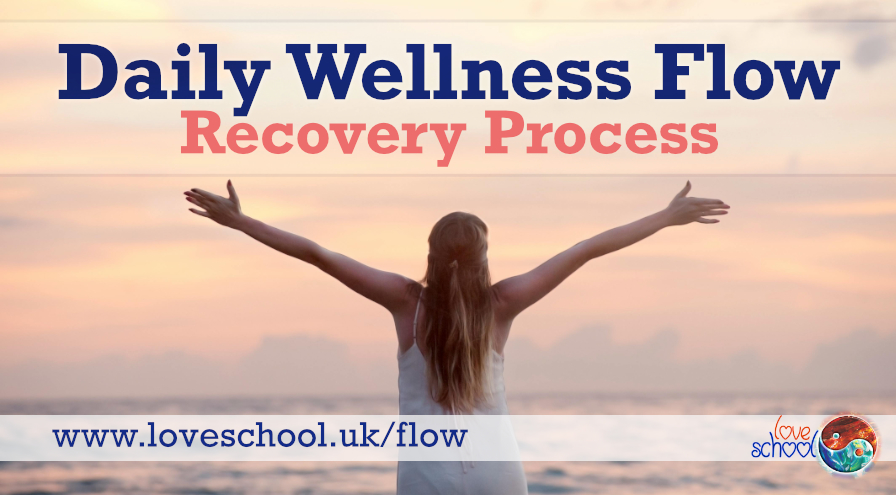
The Daily Wellness Flow offers a process of self-care with guided, practical steps daily that allow you to follow a life design process. We connect with nature, pay attention to yourself as you nurture, and meet needs, and we focus on good habits, better health and overall, holistic well-being for a more stable, balanced lifestyle.
The process is specially designed for beginners and is an introduction to natural, holistic recovery.
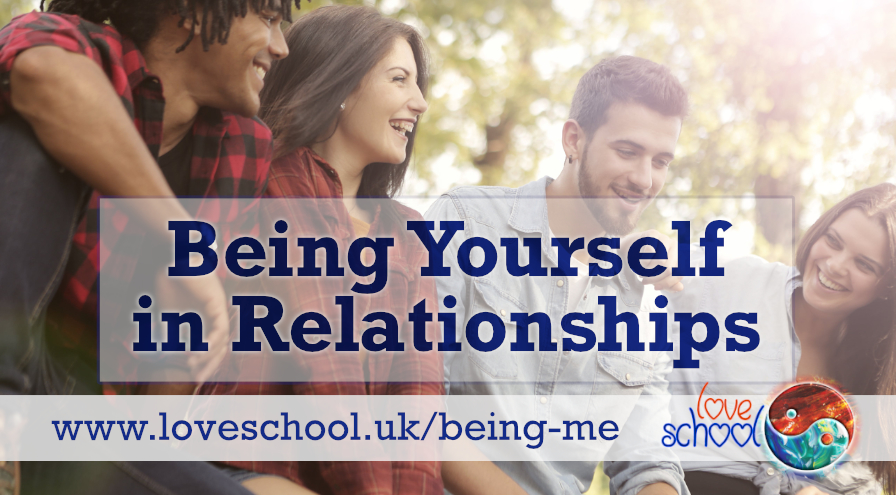
In this case, I also recommend our course, Being Yourself in Relationships, where we invite you to slow down, explore what you want and need for yourself in connection with others.
If you struggle with this type of pattern and would like some personal support to unpack and move through it, The Art of Enough's six-month mentorship programme can guide you through this process.
Learning to set boundaries and understanding the unconscious reasons why this is challenging to u,s and creating a strategy to change this, is one of the main things I support with. I also help you to become clear on your values and what's important to you as you set boundaries in line with your integrity, and help you to get back in touch with your hidden desires to enjoy your free time more.
Read about how Love School Started & How to make the most of the space here
Introducing Love School
Love School began with real experience and, after years of experimenting, research, and personal understanding of healing and recovery through natural, holistic methods.
Read our dedicated blog posts explaining what the space is about, why it was created and how you might use it to support your own healing or recovery journey.
Love School Pathways
What is Possible In Natural Recovery?
Love School Origin Story
Join Our blog Mailing List!
Share your details here to have our blog posts delivered to your inbox for free!
Looking to Explore More...
Blog Categories
Browse More of our blog Posts!
We cover a holistic range of blog categories to support the different stages of your healing or recovery journey.
As part of an ecosystem mindset, we offer insights into the interconnected areas to consider to create a balanced lifestyle.
Browse through our other blog categories below:
Browse Love School Shop!
Explore Love School Courses, Membership & support Services